



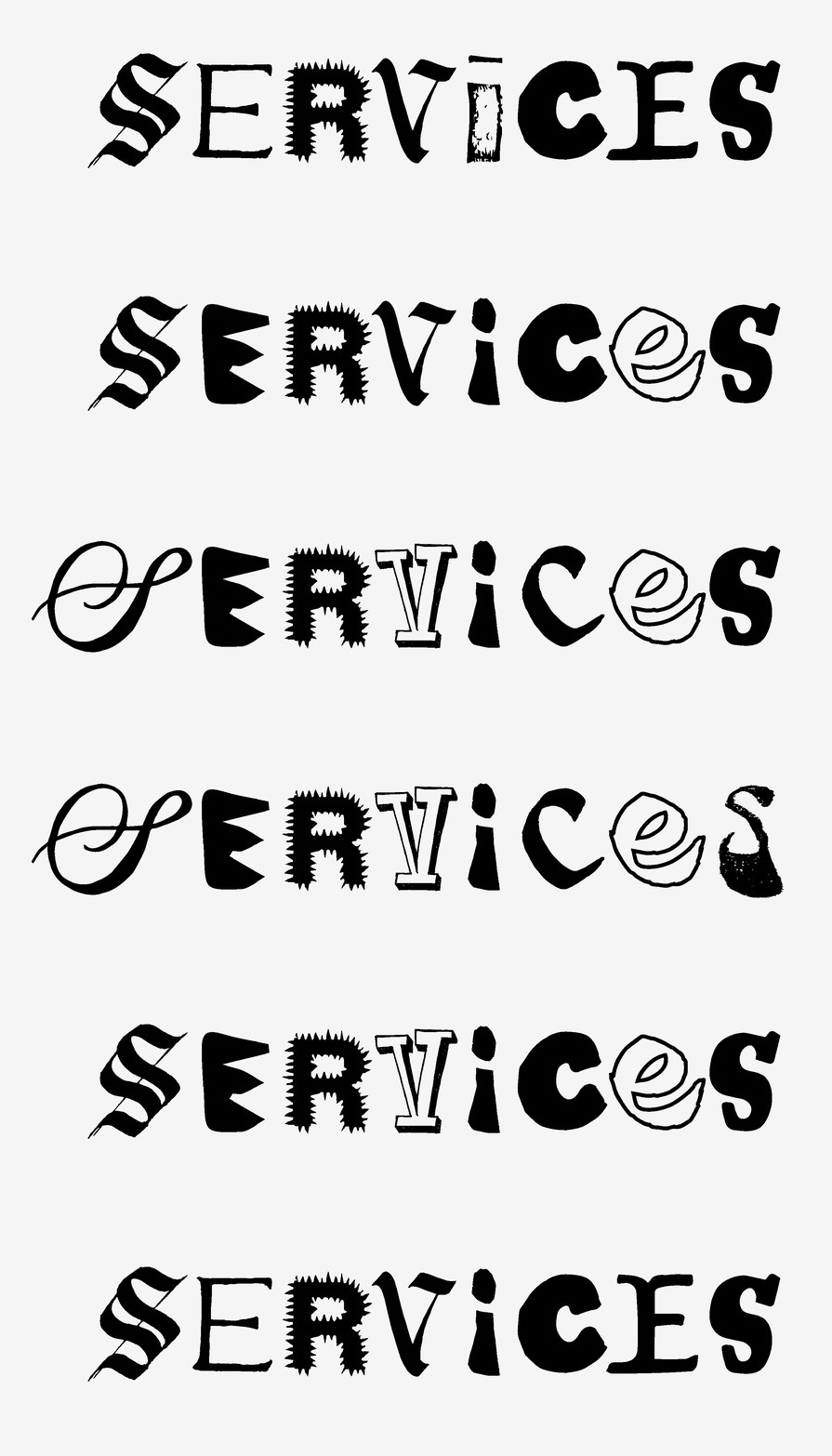
I offer compelling design for all things type across three areas:
Lettering
Standing out with type


Graphic Design
Type in context
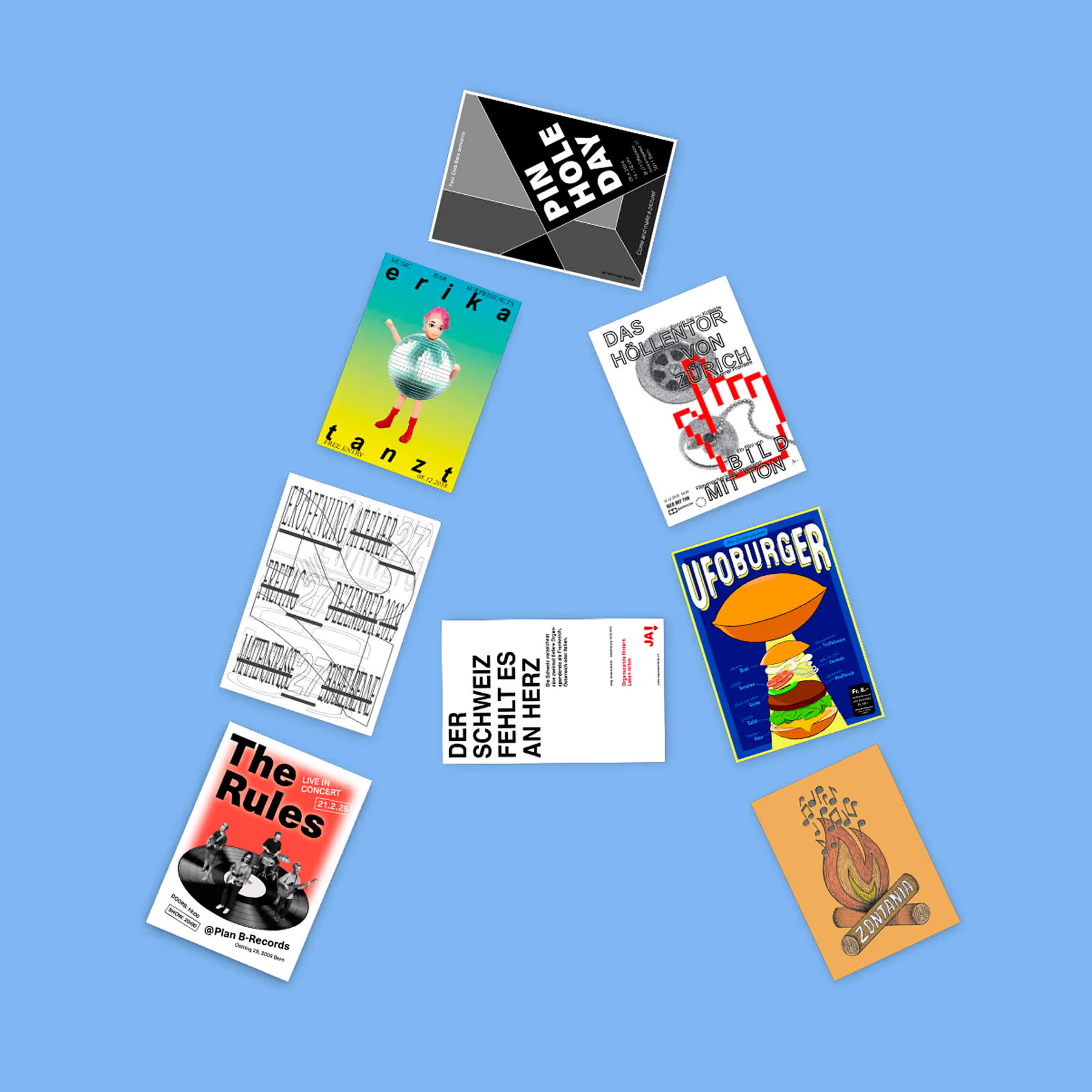
Type Art
Let type dance


Samuele Taghizadegan
Musician
James Schneider
General Manager Hotel ibis Styles Bern City
The four stages of a project
Introduction
I get a feel for what you need, who your target audience is, and which channels, techniques, or media would be suitable for your project. I will send you a fair and clear quote, and then our collaboration can begin.
Sketching
I respect and take into account your ideas, input, and visions—and I also contribute my own ideas and recommendations. I work efficiently and in a goal-oriented manner, and I communicate clearly and directly.

Creation
If necessary, we will correct, revise, and make adjustments. When it comes to text-heavy projects and typography, I place a particular emphasis on ensuring excellent readability. Your project is taking shape and evolving into a compelling, relevant end result.

Finalization
We will stay in touch, and if needed, I will continue to support your project after it is completed.
What’s your pricing like?
I work with a fair hourly rate and an efficient process. After your inquiry, I’ll provide a clear quote so you can make an informed decision. I focus on delivering thoughtful, high-quality design with lasting value.
How exactly does the commission request work?
The request is an easy-to-understand online form that covers the most important points about your project and your ideas. For example, you can already provide me with specific details, such as the location and date of a flyer for an event or the scope and budget of the project. This saves both of us time right from the start and helps me get an overview. You only need to fill in the fields you consider necessary, and the request is completely non-binding, so you can still change your mind or modify the scope even after submitting the request. A binding collaboration will only begin once you sign the subsequent quote.
What is your stance on AI?
Overall, I'm skeptical, but I'm open to AI as a useful tool. In the creative field, AI should never be used as a substitute for creative work, but rather as a support throughout the process and to make repetitive, non-content-related tasks easier. For example, I hardly ever use ChatGPT. It's not a matter of principle; it's just that I much prefer to get information and answers directly from the source, which also allows me to support and value the people behind them. You end up in exciting places on the internet if you take the occasional detour.
Useful tasks for AI in the graphic design process:
- Upscale low-resolution images (results vary)
- Some Adobe features already include AI natively, such as “content-aware fill.” I use this feature only for backgrounds and for elements that do not change the context. So, for example, don't alter faces.
- Use this feature only for backgrounds and for elements that do not change the context. So, for example, don't alter faces.
- Well-designed tools to serve as inspiration, such as: https://tool.eternalresearch.com
Interestingly, AI is still pretty bad at anything related to designing fonts and working with type, i.e., font design, typography, lettering, and calligraphy. I think this is because reading and writing are very human activities. We read type with our eyes, so it has to adapt to how our eyes perceive it. For example, in type design, optical illusions must be deliberately counteracted. In addition, there is a certain degree of arbitrariness in the appearance of the typefaces we know today; the letter 'A' looks the way it does because it originated from a pictorial representation of a bull's head and then underwent a rather haphazard evolution in form over the course of several centuries. Last but not least, type is highly dependent on context and environment. All of these factors make it difficult for AI to generate or imitate sophisticated typography.
What’s the difference between lettering and calligraphy?
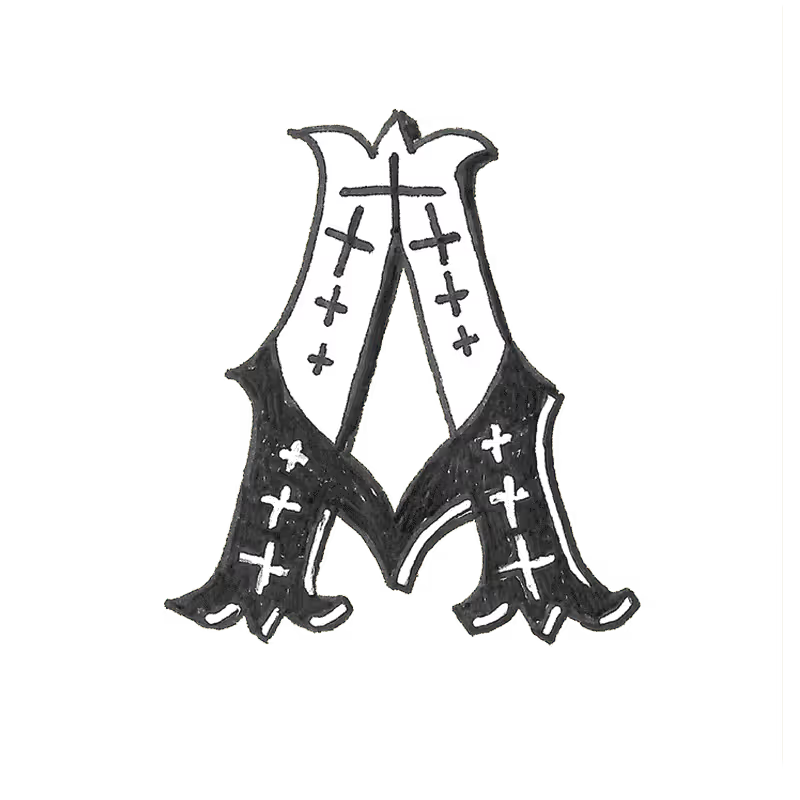
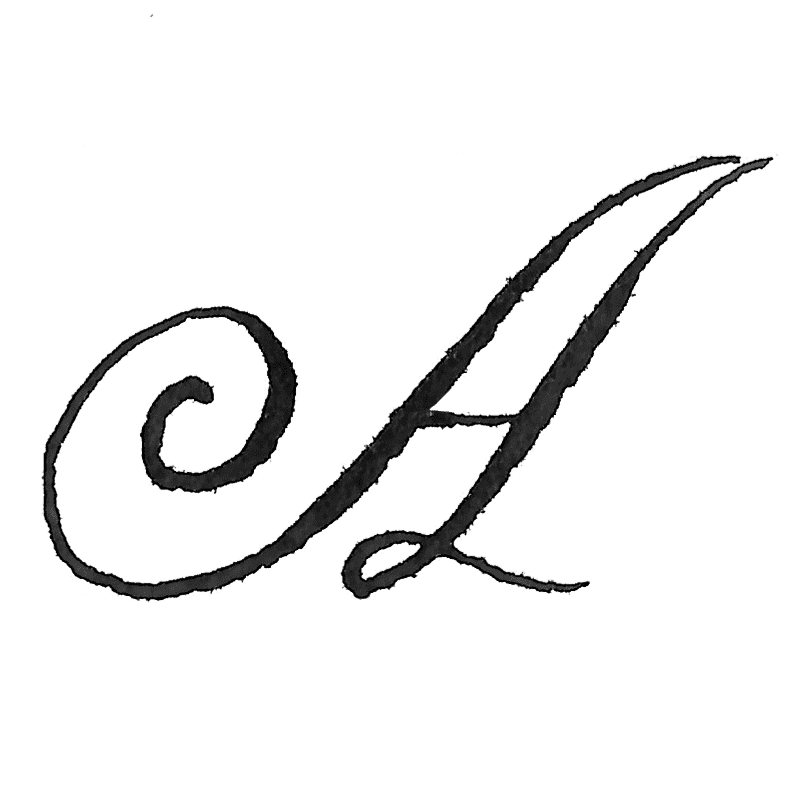
In lettering, the letters are drawn and shaped and modified as they are written, for example, by adding a 3D effect. In calligraphy, the goal is to write the letters in a single, flowing motion using individual strokes (downward, diagonal, etc.). Example below: Lettering on the left and calligraphy on the right.
.gif)